
The front-line production workshop is the most critical place for a manufacturer. Front-line employees directly affect production progress and product quality, so creating a good workshop environment is an important mark of an excellent manufacturer. Outside northern China, most of the country, especially the manufacturing-heavy south, sees temperatures close to or above 35°C. Cooling the production environment is a pressing and practical issue!

Without a reasonably comfortable working environment, productivity drops at best and workers fall ill at worst. A factory without a good environment is clearly unattractive to workers, which leads to hiring difficulties and high turnover. In addition, much production equipment develops all kinds of problems when it runs in high heat for long periods. The production environment deserves real attention.
Below are several methods for your reference; the best one is the one that fits your company. With summer heat lasting several months, it demands close attention, so plan or improve early:
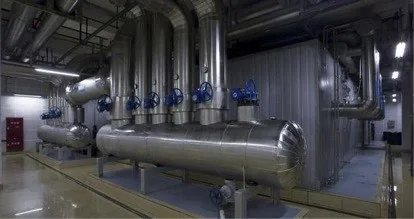
Ice cooling uses the heat absorbed as ice melts to lower air temperature. Because air conducts heat poorly, the cooled area is small, and using it over a large area inevitably runs into high costs.
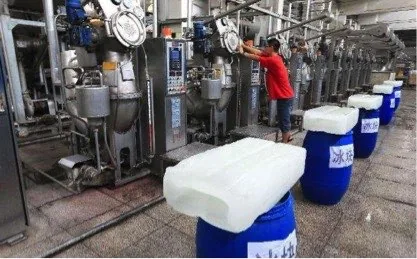
Mist cooling is also an effective method, but the excess humidity affects machinery and people’s health, so it is not suitable for production workshops. It is a compromise-type cooling method.
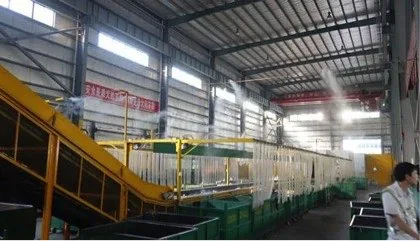
Negative-pressure fans work on air convection and negative-pressure ventilation: fresh air is drawn in naturally through the opposite door or window of the installation point, and the stuffy indoor air is forcibly expelled outdoors. The drawback of negative-pressure fans is noise, which is hard to solve.
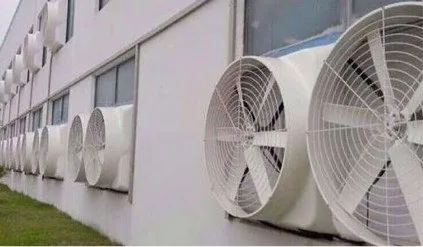
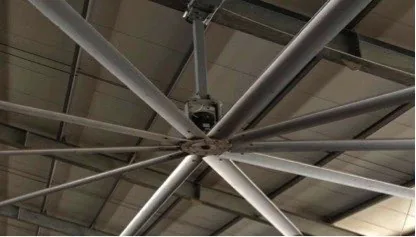
This method can be said to be one of the better options in terms of cost-effectiveness. Unlike traditional desk fans and wall fans, which have many drawbacks, large industrial ceiling fans let most manufacturers ventilate the whole plant. In summer they can quickly lower employees’ perceived temperature by 5–8°C and significantly raise productivity.
Workshop cooling may look unrelated to lean, but it is foundational shop-floor management: a comfortable environment stabilizes people, machines and quality — the "respect for people" side of lean production. If you are systematically improving your operations, read our guide How to Implement Lean Manufacturing, or learn about our lean manufacturing consulting.
First published July 2019; revised and updated October 2026.